
Meigs Projected and Actual Dates
A projected release date is a calculated future date based on the sentence record and credits known at that point. Actual release is the operational event when a person leaves one custodian. They can differ. A transfer to ODRC, another jail, federal custody, or ICE ends custody at one facility without placing the person in the community.
For an ODRC record, the exact public label is Expected Release Date/Parole Eligibility Date. ODRC defines it as a projected release date or a date pending parole consideration. In a parole case, eligibility means the person may be considered. It does not mean the Parole Board has granted release. An official judicial-release example also shows why the whole record matters: a status of RELEASED - Judicial Release may appear beside an older future sentence date.
Scheduled versus actual: Treat the current status, release detail, and court order as controlling context. Never publish the expected-date field alone as a guaranteed exit day.
A pretrial Meigs detainee usually has no sentence-based date. Bond terms, a dismissal, a recognizance order, or a later court ruling may authorize release, but the holding facility must still clear all holds and record the exit. The court provides legal authority. The custodian provides the release time.
Find a Meigs Inmate Release Date
Identify the custody system first. The former Meigs County Jail is closed, and at least some Meigs Sheriff cases have appeared at Southeastern Ohio Regional Jail. A person committed on a felony sentence may instead be in ODRC. The Meigs County released inmate search helps resolve the facility before a date is requested.
- Determine whether the person is awaiting trial, serving a local sentence, in ODRC, or already under supervision.
- For ODRC, open the Offender Search and search by last name or offender number.
- Match the person with date of birth, ODRC number, committing county, docket, and offense.
- Read status before the Expected Release Date/Parole Eligibility Date, then review parole or release detail and POA/PRD fields.
- For a local sentence, obtain the Meigs sentencing entry, jail-time credit, and the holding facility's computation.
- For a pretrial case, follow the court docket and confirm that bond or other release authority was carried out by the custodian.
The official ODRC search form provides filters for incarcerated, released, and APA-supervised records.
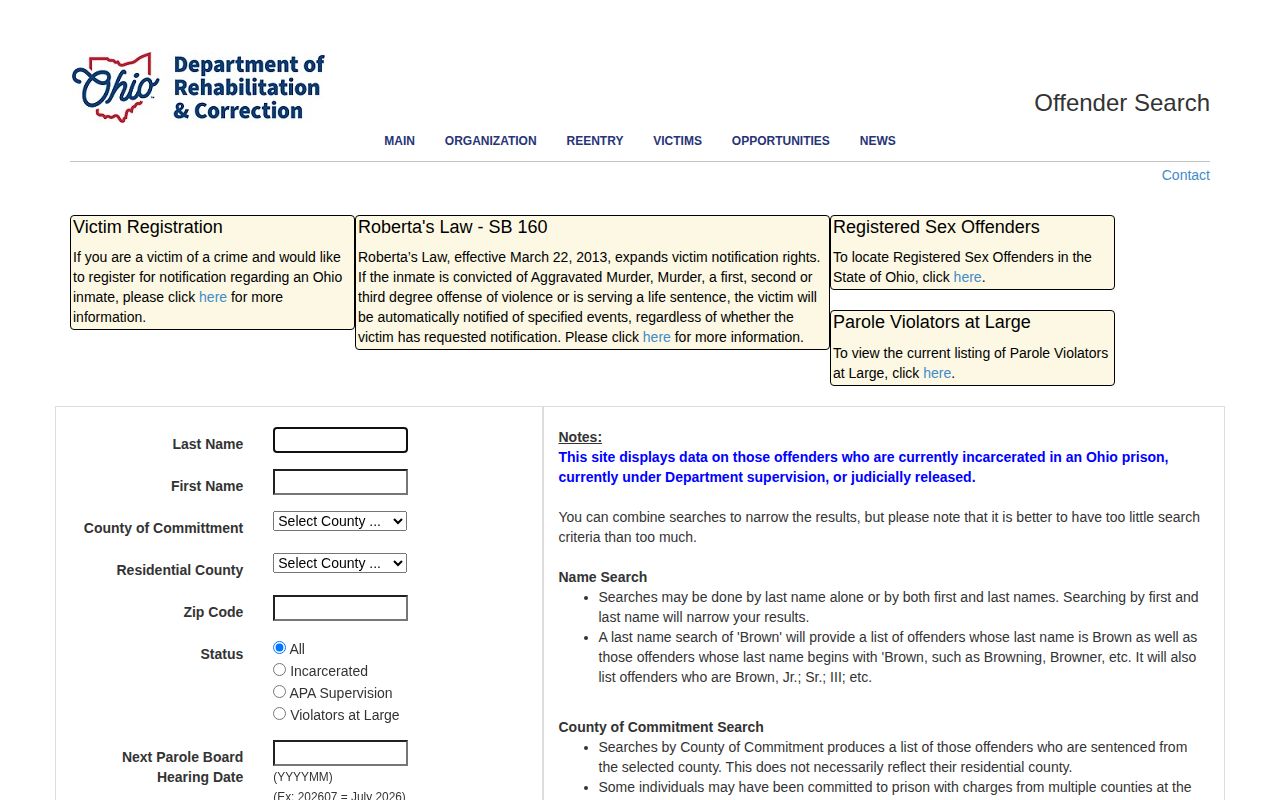
Choosing Meigs as committing county can narrow a state case, but residential county means the recorded residence associated with supervision and serves a different purpose.
Ohio Credits Shape Meigs Release Dates
Ohio does not have one rule that makes every sentenced person serve exactly 85 percent. Current Ohio Revised Code §2967.194, applicable beginning April 4, 2024, allows qualifying ODRC prisoners to provisionally earn one or five days per completed month of productive participation, depending on the statutory category. Detailed exclusions and administrative steps apply. Credits can be denied or withdrawn, and the general aggregate cap is 15 percent of the stated term.
That cap is the source of an 85-percent shorthand for some eligible stated terms, but it is not a universal formula. Mandatory time, excluded offenses, jail-time credit, completion awards, old-law parole, life terms, judicial release, transitional control, and Reagan Tokes indefinite sentences can produce different results. Transition cases can implicate §2967.193. Ohio Administrative Code 5120-2-06 implements productive-participation credit, while OAC 5120-2-03.2 distinguishes sentence eras.
The statute capture comes from the official Ohio Laws earned-credit page.
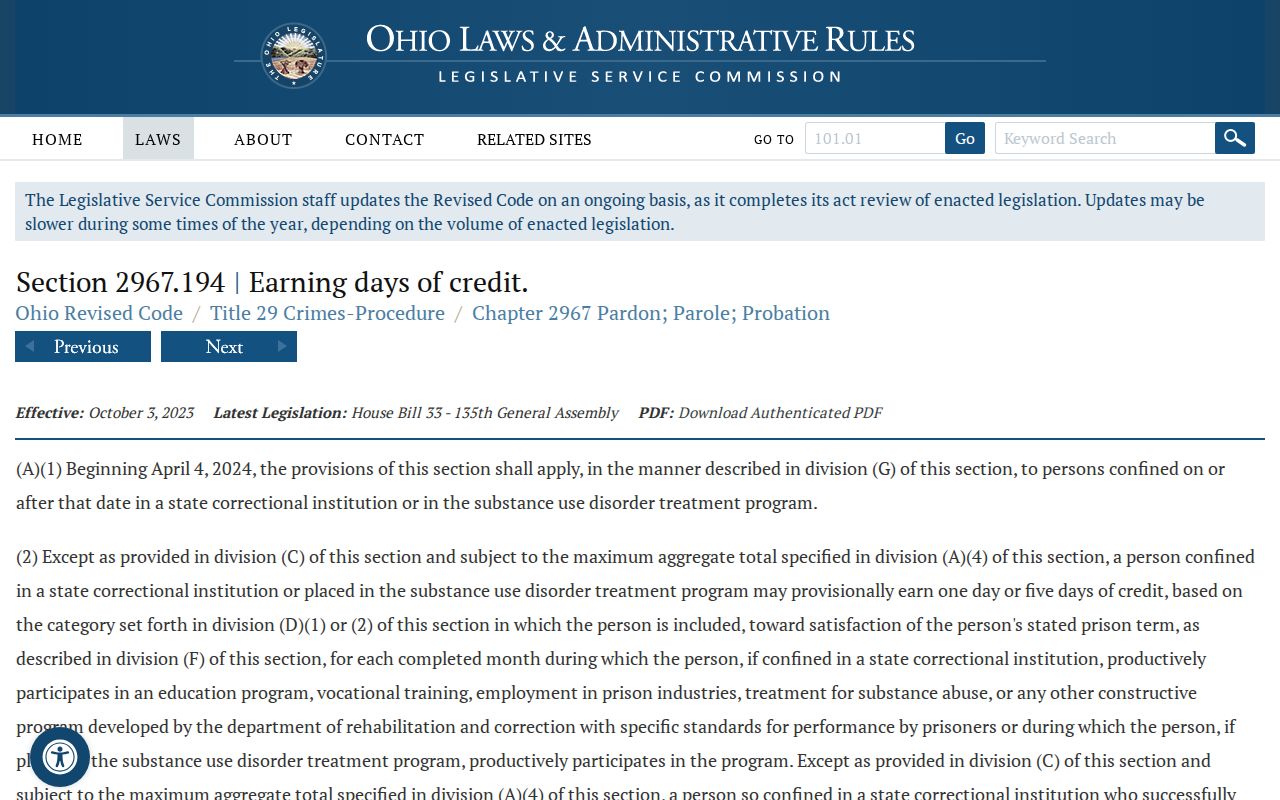
The formal rules show why an independent date calculator cannot replace ODRC's computation and the sentencing journal.
Note: No sourced Meigs-specific county-jail good-time or weekend-release rule was found, so local credit must be confirmed from the actual sentence and custodian.
Why Meigs Release Dates Change
A date may move when the legal sentence, credited time, earned credit, or release authority changes. Some factors alter the calculation. Others keep the calculated date but prevent community release. Always preserve the exact source label and access date.
| Factor | Possible effect | Where to confirm |
|---|---|---|
| Jail-time credit | Reduces time remaining when the court and ODRC apply credited days | Sentencing journal and ODRC sentence detail |
| Earned credit | May move a qualifying release calculation earlier after it is awarded | ODRC computation under §2967.194 |
| Credit denial or withdrawal | May leave more time to serve | ODRC's finalized computation |
| Parole decision | Eligibility may lead to grant, denial, continuation, or a later review | ODRC detail and official Parole Board result |
| Judicial release | Can produce release before an older sentence end date | Common Pleas journal entry and ODRC status |
| Detainer or other hold | Can block community exit or cause transfer despite release in one case | Facility movement record and other docket |
| Sentence structure | Concurrent, consecutive, mandatory, or indefinite terms affect the aggregate date | Judgment entry and ODRC Central Records |
A court order that grants release in one Meigs case does not clear a separate warrant. Likewise, delivery from a local jail to ODRC under Ohio Revised Code §2949.12 is a transfer, not a community release.
Confirm a Meigs Release Date
A future ODRC date should be monitored through the official detail record. The ODRC definitions page explains whether a displayed field is projected release or parole consideration. In a parole case, §2967.13 supplies sentence-specific eligibility rules, while a board hearing and result determine what happened next.
For a current custody event, register through the Meigs VINELink release check. VINE can relay release or transfer updates from participating sources, but its data can lag and it does not decide the legal meaning of an exit. Confirm the event with ODRC, Southeastern Ohio Regional Jail, the Meigs Sheriff, or the court that issued the order.
County cases require a two-source check. Meigs County Court handles misdemeanor dispositions and preliminary felony stages. Common Pleas supplies felony sentence, commitment, and judicial-release entries. A facility timestamp answers when custody changed; the docket answers why.
Read Meigs ODRC Date Labels
ODRC detail pages can show admission date, sentence terms, Expected Release Date/Parole Eligibility Date, Next Parole Board Hearing/Review Month, POA/PRD, release details, supervision status, and supervision expiration. These fields describe different stages. POA means parole on or after, while PRD means projected release date.
The official ODRC definitions screen is the source for those terms.
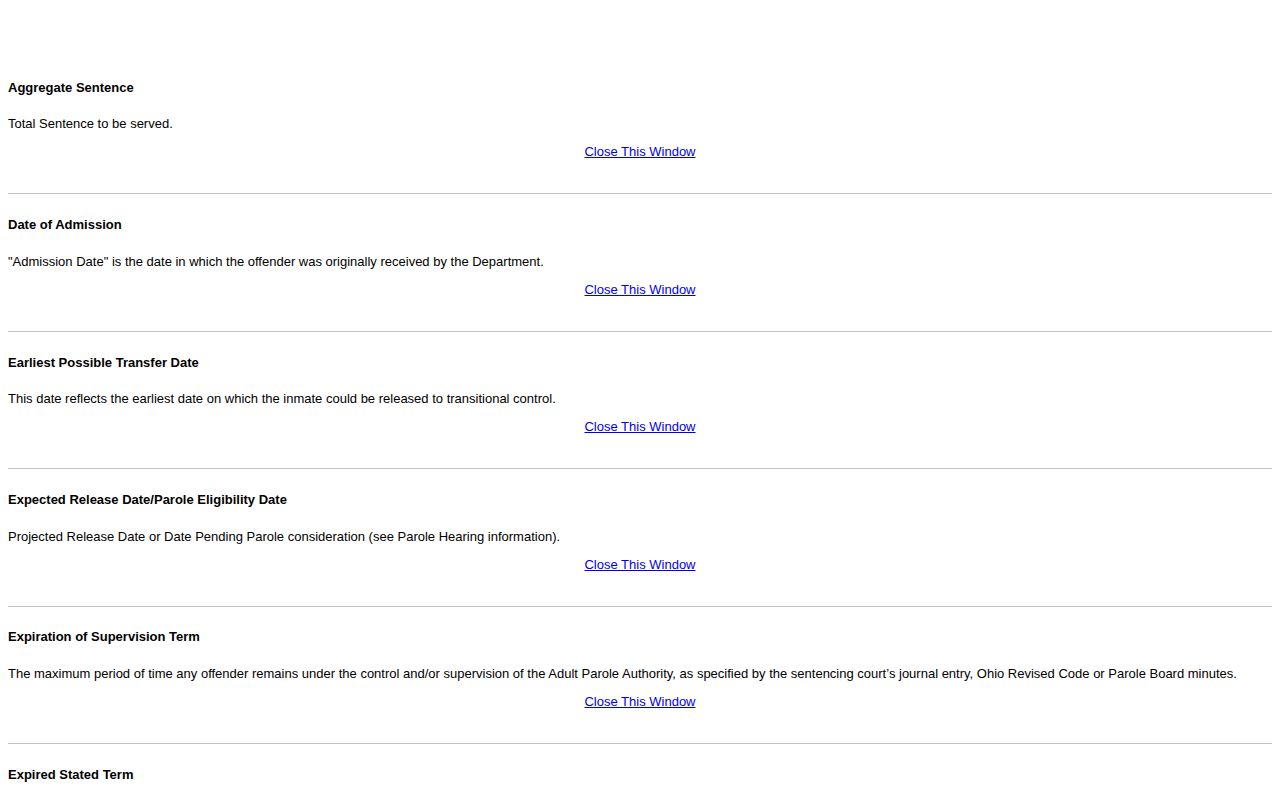
Use the definition that matches the person's exact label, then join it to status and the Meigs sentencing docket rather than collapsing all dates into one promised release.
| Displayed item | How to read it |
|---|---|
| Expected Release Date/Parole Eligibility Date | Projected exit or date pending parole consideration |
| POA/PRD | Parole on or after, or projected release date, as identified by ODRC |
| Next hearing month | Scheduled review timing, not a release grant |
| Supervision expiration | Maximum term under APA control when displayed, not the prison exit date |
Meigs Local Sentence Computation
A short local sentence does not use the state earned-credit rule by default. Obtain the sentencing entry, the court's jail-time credit, booking dates, and the actual holding facility's calculation. Because the Pomeroy jail is closed, first ask the Meigs Sheriff where the sentence was served. SEORJ has held at least some Meigs Sheriff cases, but Meigs is not named among its five member counties.
Ask the responsible custodian for the existing booking and release transaction, release type, and receiving agency if a transfer occurred. If the date remains disputed, request an explanation of the calculation from the custodian and compare it with the journal entry. No Meigs-specific good-time policy or fixed weekend-release practice was verified as of the research date.
A bond amount is not a release date. The docket may show that a judge set terms, yet it may not show when money was posted, a surety was accepted, or another hold cleared. A dismissal also resolves only the identified charge. Ask the facility whether the person remained on another case or moved to another custodian before describing the event as community release.
For a felony, follow the record from County Court's bond and preliminary stage into Common Pleas. The Common Pleas judgment shows the sentence, jail-time credit, and any prison commitment. A later judicial-release entry can authorize an earlier departure from ODRC, often with community control. Match that entry to ODRC's exact status and release detail. For older Common Pleas matters filed before January 1996, the online portal directs the reader to the clerk in person.
ODRC Central Records is the correction route when a public state date looks inconsistent. Correspondence goes to Attn: Central Records, P.O. Box 430, Columbus, OH 43216. Include the ODRC number, exact disputed field, and supporting Meigs docket information. Do not ask the sheriff to recalculate a state prison term that ODRC administers.
Meigs Parole Eligibility Timing
Parole eligibility applies to specified indefinite and life sentences under Ohio Revised Code §2967.13. Eligibility authorizes consideration. The Parole Board may grant, deny, continue, or schedule later review under the governing rules. ODRC's search accepts a next-hearing month in YYYYMM format, and the detail can display the latest hearing type and result.
Transcribe an official result exactly. A result marked continued hearing is not parole, and a first hearing is not a decision to release. Even a favorable decision can remain subject to documented release-plan steps or later action. Confirm the eventual physical exit through ODRC release detail instead of turning the hearing month into an inmate release date.
Ohio rules also allow later review or a discretionary projected date in specified parole cases. Such a date creates no entitlement. It may be accelerated, upheld, or rescinded under the applicable process. That is why the current board result, the later ODRC status, and the actual release detail must be read in sequence.
When the person has already left prison, check whether the detail says APA Supervision or another released status. APA Supervision confirms department control outside prison, not final discharge. The supervision expiration field answers a different question from the prison exit date. Match it to the Meigs offense and docket so supervision tied to another case is not assigned to the wrong conviction.
For a release-date record request, ask for the field in its existing form rather than demanding a new calculation. Identify the person and ODRC number, quote the exact date label, and state which Meigs judgment is being compared. A precise request makes it easier for Central Records to address the discrepancy without disclosing protected institutional material.